The clinical record generated during treatment has value beyond the practice that produced it, particularly for patients whose subsequent care will occur elsewhere.
Composition of the record
A complete record comprises the standardised photographic series, radiographic and tomographic imaging, digital scan files, the treatment plan and its revisions, consent documentation, clinical notes, laboratory prescriptions and the identification of materials and implant systems employed.
Implant records should include manufacturer, system, diameter, length and reference numbers for each fixture and its corresponding components.
Retention and access
Retention obligations are defined by the jurisdiction in which treatment was provided. Patients are generally entitled to obtain a copy, and the request need not be justified.
Requesting the complete record at the conclusion of treatment, rather than when a problem arises, is the more reliable approach, particularly across borders.
Practical significance for patients treated abroad
A practitioner in another country cannot order a replacement component without the system identification, and cannot assess change over time without baseline imaging.
Possession of the record by the patient substantially reduces the practical difficulty of obtaining subsequent care and constitutes the principal protection against discontinuity.
Format
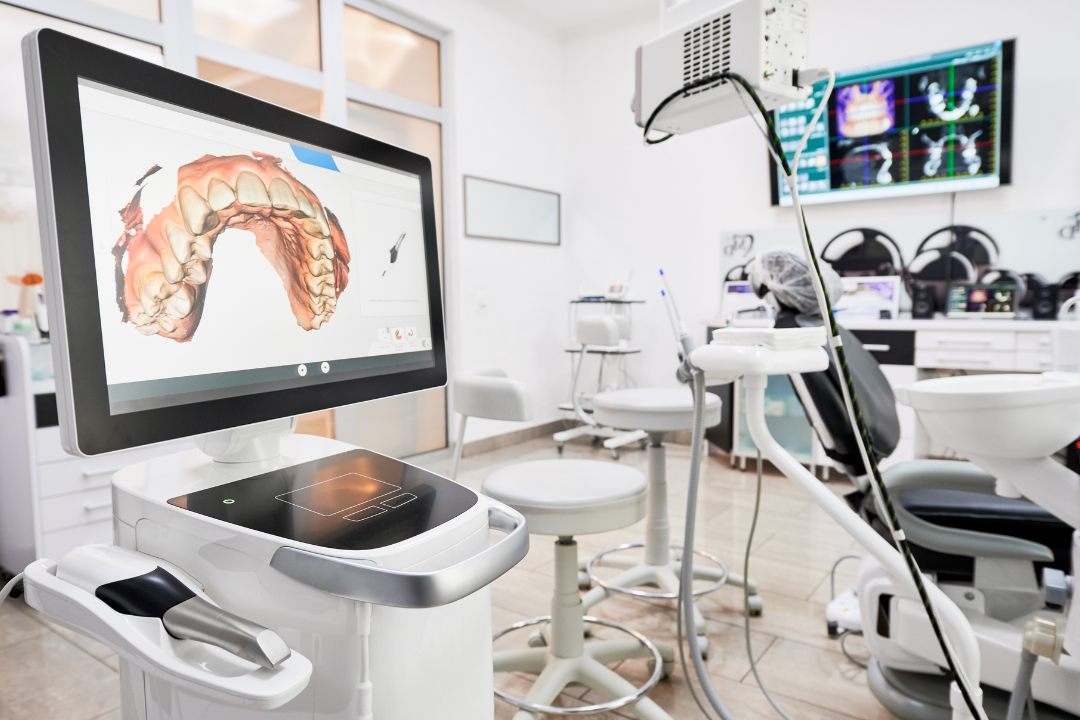
Files should be supplied in standard formats: DICOM for tomographic imaging and STL or PLY for scan data. Proprietary formats readable only by the originating software are of limited utility elsewhere.
Request the complete record in standard formats at the conclusion of treatment and retain it independently. It is the component of your treatment that remains portable.
To determine whether this procedure is indicated in your particular case, we invite you to request a clinical assessment.