A partial denture that has stopped being worn represents a treatment failure, and the reasons are worth examining before a replacement is fabricated to the same specification.
Documented rates of discontinuation
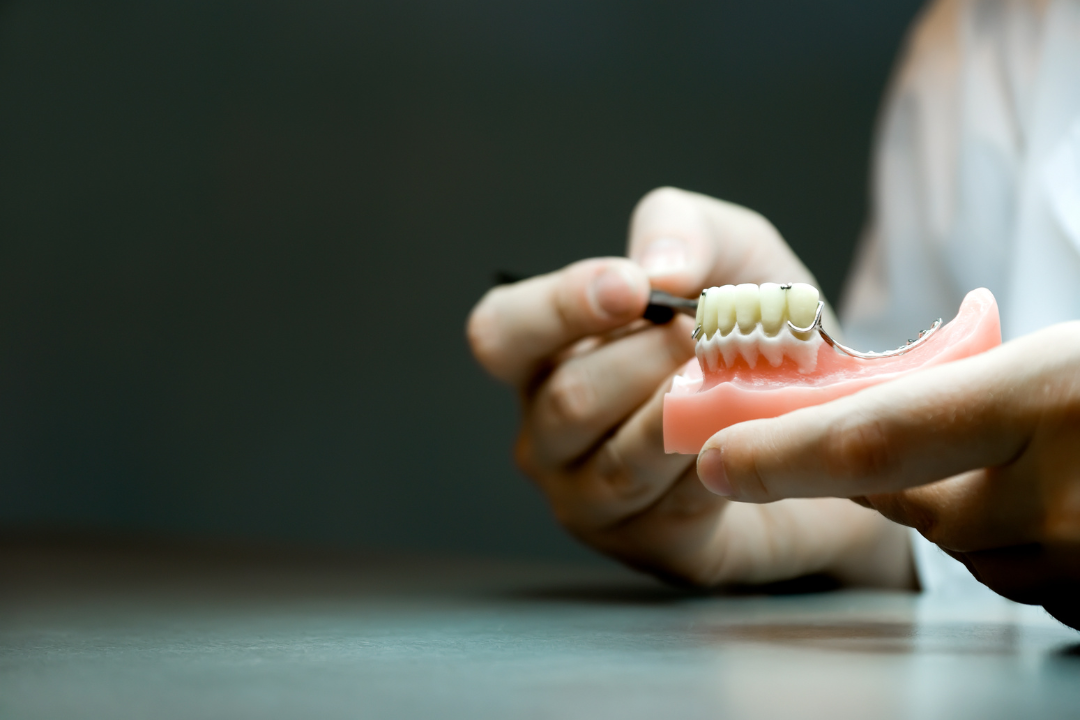
A substantial proportion of removable partial dentures are abandoned within a few years of provision. The prosthesis is generally retained by the patient but not worn.
The reasons cited most frequently are discomfort, visible clasps, difficulty with speech, and the perception that eating is no more effective with the prosthesis than without.
Consequences of non-use
The unreplaced spaces continue to permit drifting of adjacent teeth and overeruption of opposing teeth, progressively reducing the feasibility of any future replacement.
Where the prosthesis is worn intermittently, it may cease to fit, and continued wear of an ill-fitting appliance accelerates ridge resorption and may damage abutment teeth.
Options warranting consideration
Implant-supported fixed restoration of the specific spaces, which eliminates the removable component. Implant retention of the existing prosthesis, which addresses stability at lower cost.
Redesign with alternative retention avoiding visible clasps. Or, following assessment, a considered decision that shortened dental arch function is acceptable without replacement.
The assessment required
The relevant enquiry is which specific characteristic led to discontinuation, since replacement without identifying it is likely to reproduce the outcome.
Assessment should also document what movement has already occurred, since this constrains the options now available.
A prosthesis that is not worn should prompt reassessment rather than replication. The spaces continue to change irrespective of whether the appliance is used.
To determine whether this procedure is indicated in your particular case, we invite you to request a clinical assessment.