At the end of treatment you should leave with more than restorations. What you receive determines how straightforward the next twenty years are, particularly if you were treated abroad.
Imaging and scan data
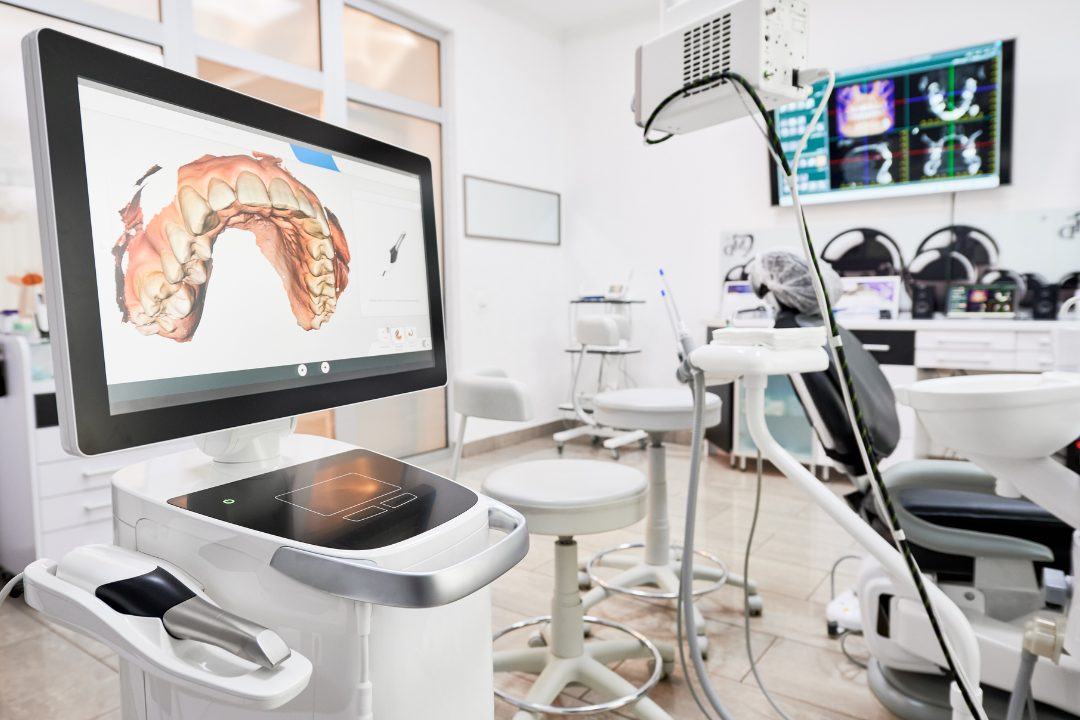
All radiographs and any CBCT in DICOM format, not screenshots. Intraoral scans in STL or PLY. These are standard formats any clinician anywhere can open.
Proprietary files readable only by the software that created them are of little use elsewhere, and asking for standard formats is entirely reasonable.
Implant and materials documentation
The implant manufacturer and system, with diameter, length and reference numbers for every fixture and component. Ideally the implant passport or the reference stickers themselves.
This is the single most commonly omitted item and the one whose absence causes the most difficulty. Without it, a dentist in New York or Montreal cannot order a replacement part.
Photographs and the clinical narrative
The standardised series from before, during and after treatment. The treatment plan with any revisions, and clinical notes recording what was done and why.
This is what lets any future clinician understand the case rather than reverse-engineer it.
Maintenance instructions
The recommended review interval, what should be checked at each visit, what your warranty covers and what voids it, and specific cleaning instructions for your prosthetic design.
If a night guard was prescribed, when it should be reviewed and replaced.
Request all of it at the conclusion of treatment rather than when a problem arises, and store it independently. It is the part of your treatment that travels with you.
To determine whether this procedure is indicated in your particular case, we invite you to request a clinical assessment.