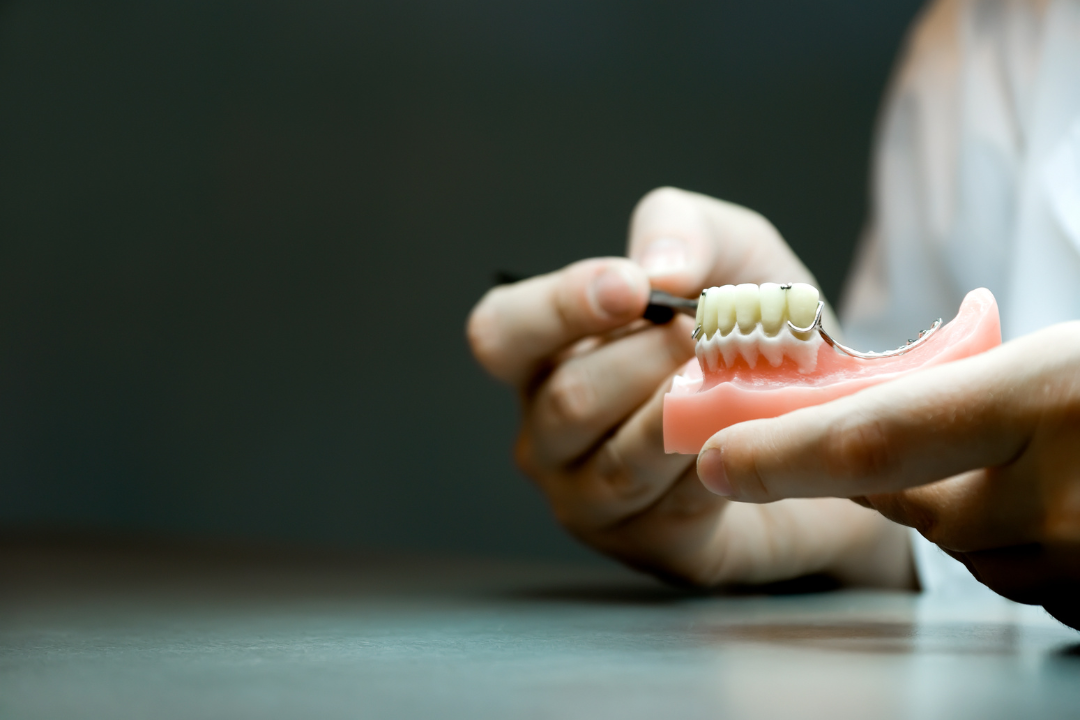
This decision is presented as cheap versus expensive far too often. The more useful framing is what each option does well, because for a significant number of patients dentures remain the right answer.
Where conventional dentures still make sense
Upper dentures work considerably better than most people expect, because the palate provides suction and retention. Many upper denture wearers are perfectly satisfied.
They also suit patients for whom surgery is medically inadvisable, and those who genuinely cannot manage the cleaning a fixed prosthesis demands.
Where they do not
Lower dentures. There is no palate to hold them and the tongue works against them, and the dissatisfaction reported by lower denture wearers is substantial and well documented.
This is the single strongest indication for implants in this age group. Two implants alone transform a lower denture, at a fraction of full-arch cost.
What implants change beyond stability
Chewing efficiency, which affects diet and therefore nutrition, and this is not a small consideration over decades. Bone preservation, since loaded implants slow ridge resorption.
And confidence in eating in company, which patients raise far more often than any clinical benefit.
The honest middle ground
A two-implant overdenture is the option most under-discussed relative to how well it serves people. It is removable, it is far more affordable than fixed full-arch treatment, and it solves the actual complaint most lower denture wearers have.
If someone presents you only with conventional dentures or full-arch fixed implants, ask about this.
Start from what specifically is not working, not from the price list. The answer is frequently smaller and less expensive than the options first put in front of you.
For an individual assessment of your case, you can request a consultation at our Bogotá practice.