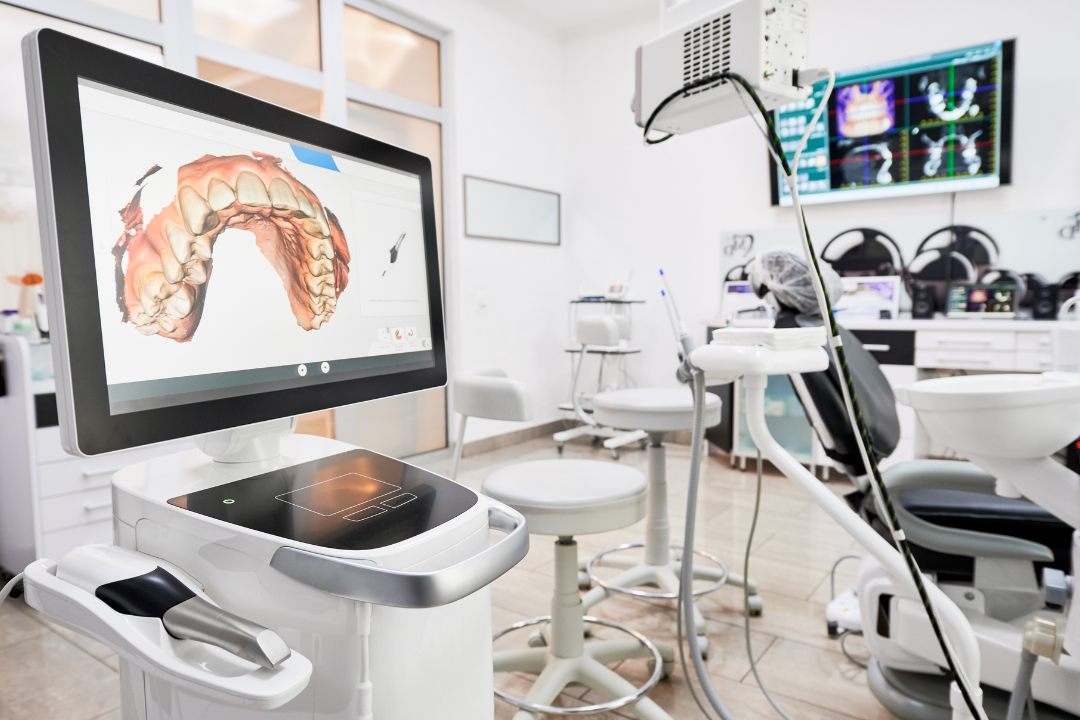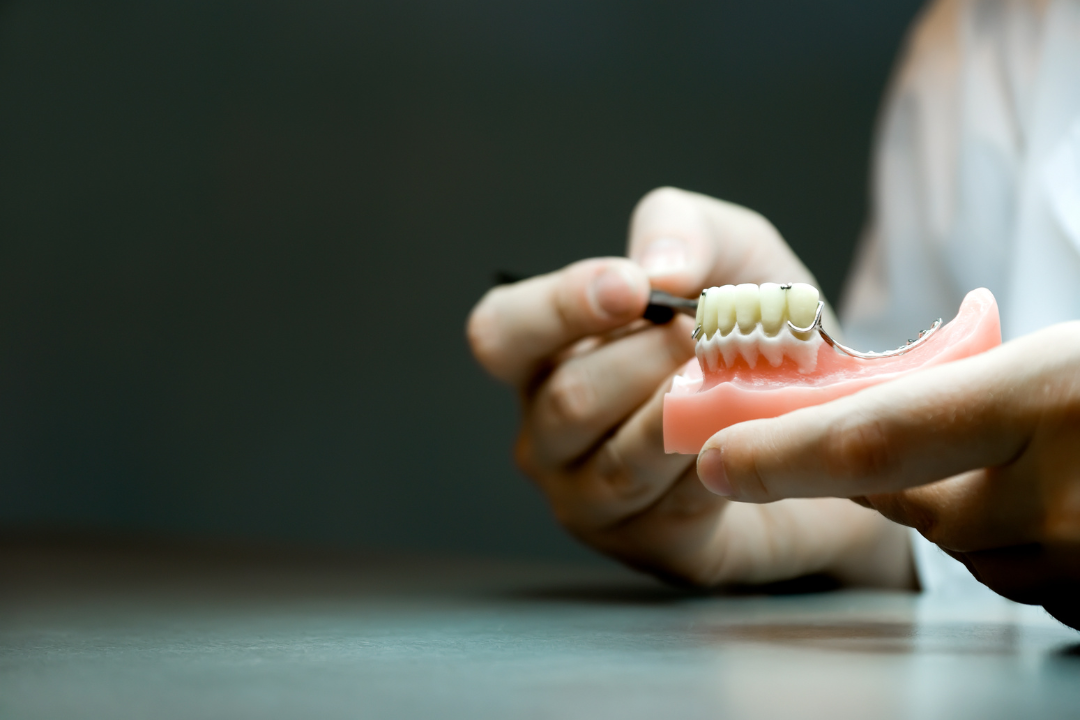
If your lower denture moves when you eat, you are not doing anything wrong and a better-made denture is usually not the answer. The anatomy is simply against you.
Why lower dentures are the hard case
An upper denture has the palate to grip. A lower one has a narrow horseshoe of ridge, and a tongue that is actively working against it all day.
Add years of ridge resorption and there is very little left to hold anything. This is why lower denture satisfaction is consistently poor in surveys and why patients often conclude, wrongly, that they have simply been unlucky with their dentist.
What two implants change
Two implants in the front of the lower jaw, with attachments that the denture clips onto. That is the whole intervention, and it is among the most transformative in dentistry relative to its cost and complexity.
The denture stops lifting when you chew and stops moving when you speak. Chewing efficiency improves substantially, and with it what people are willing to eat.
Why this is not talked about enough
Patients are frequently presented with two options: a new conventional denture, or a full fixed implant bridge at many times the price. The two-implant overdenture sits between them and gets skipped.
It is well documented, has been recommended in consensus statements for years, and is considerably more affordable than full-arch fixed treatment.
What it does not do
You still take it out to clean it. It still covers tissue. If what you want is teeth that never come out, this is not that treatment.
But if what you want is to eat without your denture moving, it very reliably is.
If a loose lower denture is the actual problem, ask specifically about a two-implant overdenture before considering anything larger. It solves the complaint most people actually have.
Questions about your own case? Send us your photos and we will walk you through the options.