Patients presenting with an unstable lower denture are typically offered two categories of solution. They differ substantially in cost, but more importantly they differ in what they are able to achieve.
Implant-retained overdentures
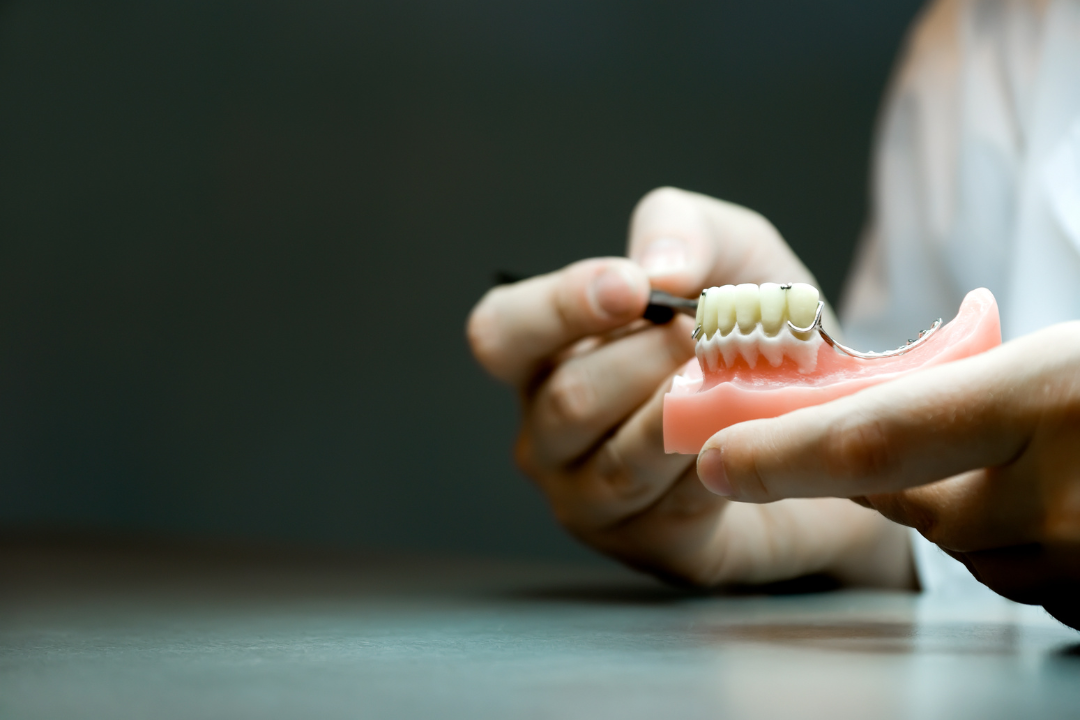
Two to four implants retain a removable prosthesis via attachments. The denture clips into place and is removed by the patient for cleaning.
This resolves the principal complaint of most lower denture wearers, which is instability during function. It does not eliminate palatal coverage in the upper arch, nor does it restore full masticatory efficiency.
Fixed implant bridges
Four to six implants support a prosthesis that is screw-retained and removable only by the clinician. The patient cleans around it rather than removing it.
Masticatory function approaches that of natural dentition, and the psychological difference reported by patients transitioning from removable to fixed prostheses is consistently described as substantial.
Cost differential and its basis
The fixed option involves more implants, a more complex prosthesis and greater laboratory input, and is accordingly quoted considerably higher. In the US, full-arch fixed treatment commonly falls in the $20,000 to $40,000 per-arch range, while two-implant overdentures are quoted materially lower.
The differential is genuine rather than arbitrary, and reflects a different clinical outcome.
Selection considerations
Available bone, manual dexterity for hygiene, opposing dentition and the patient’s tolerance of a removable appliance all bear on the decision. Overdentures remain an appropriate and well-documented solution for many patients, and should not be regarded merely as the cheaper option.
The relevant comparison is not price against price, but the outcome each option delivers against what the patient requires from it.
For an individual assessment of your case, you can request a consultation at our Bogotá practice.