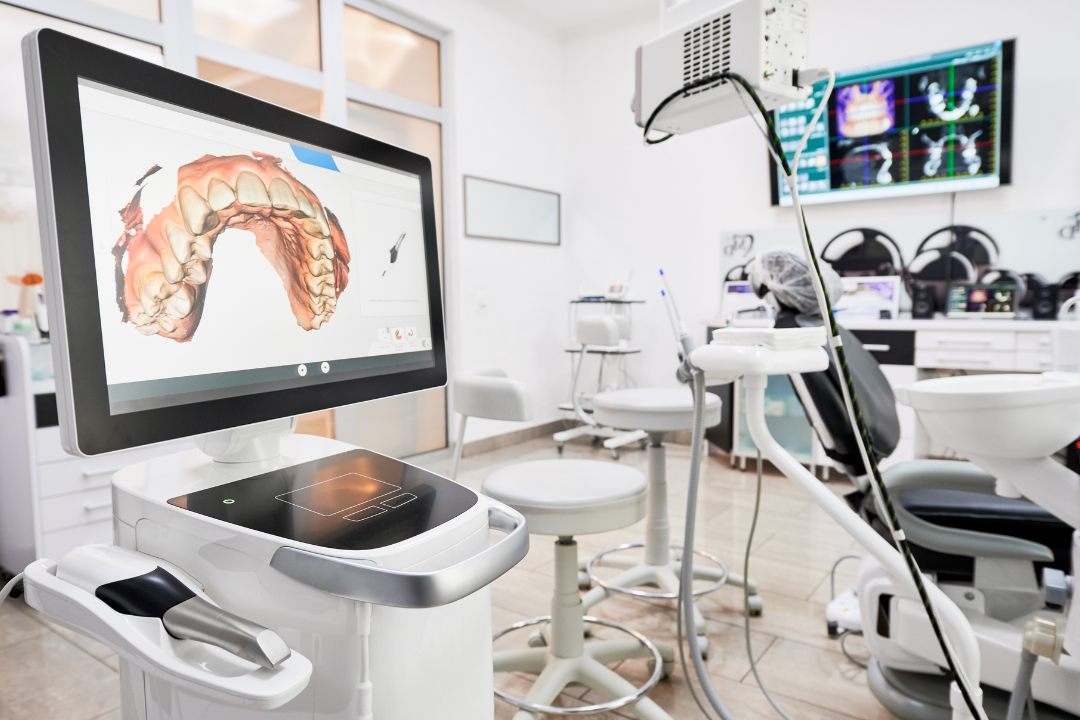
Before rebuilding an entire bite, it is worth being able to test it. The virtual articulator is how that testing happens without committing anything.
The problem it addresses
In full-mouth work the existing bite is frequently part of the problem, so it cannot serve as the reference. A new one has to be designed, and designing a bite is considerably harder than designing teeth.
Get it wrong and the consequences are muscle pain, joint symptoms, fractured ceramic, or a reconstruction that never feels right.
What the virtual version adds
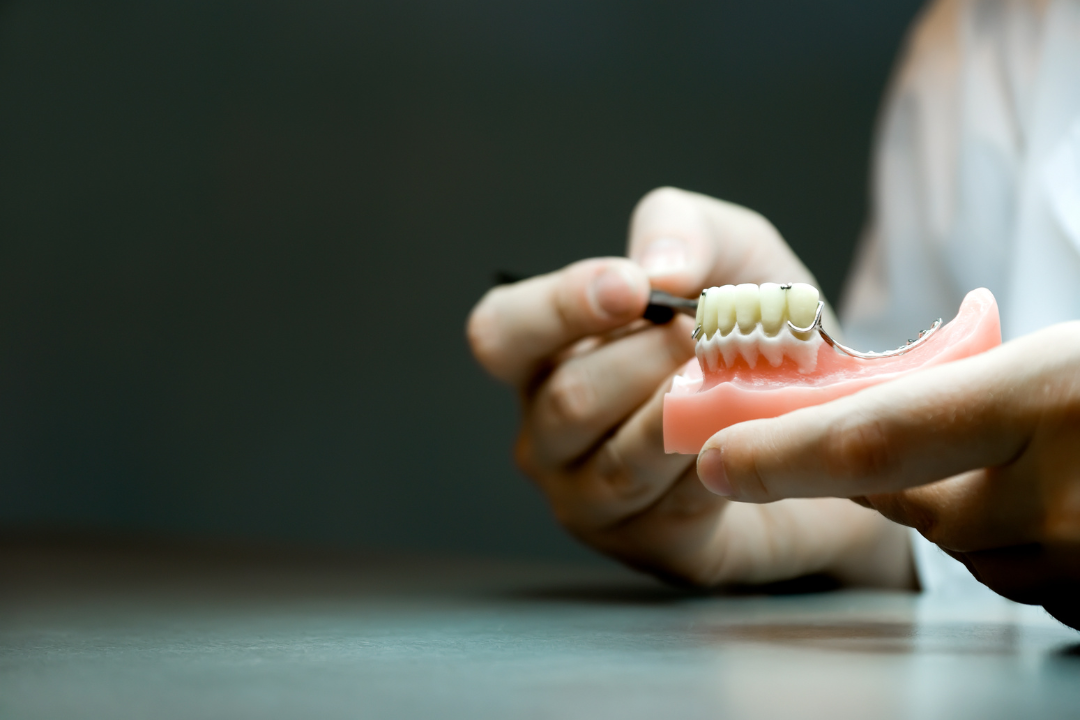
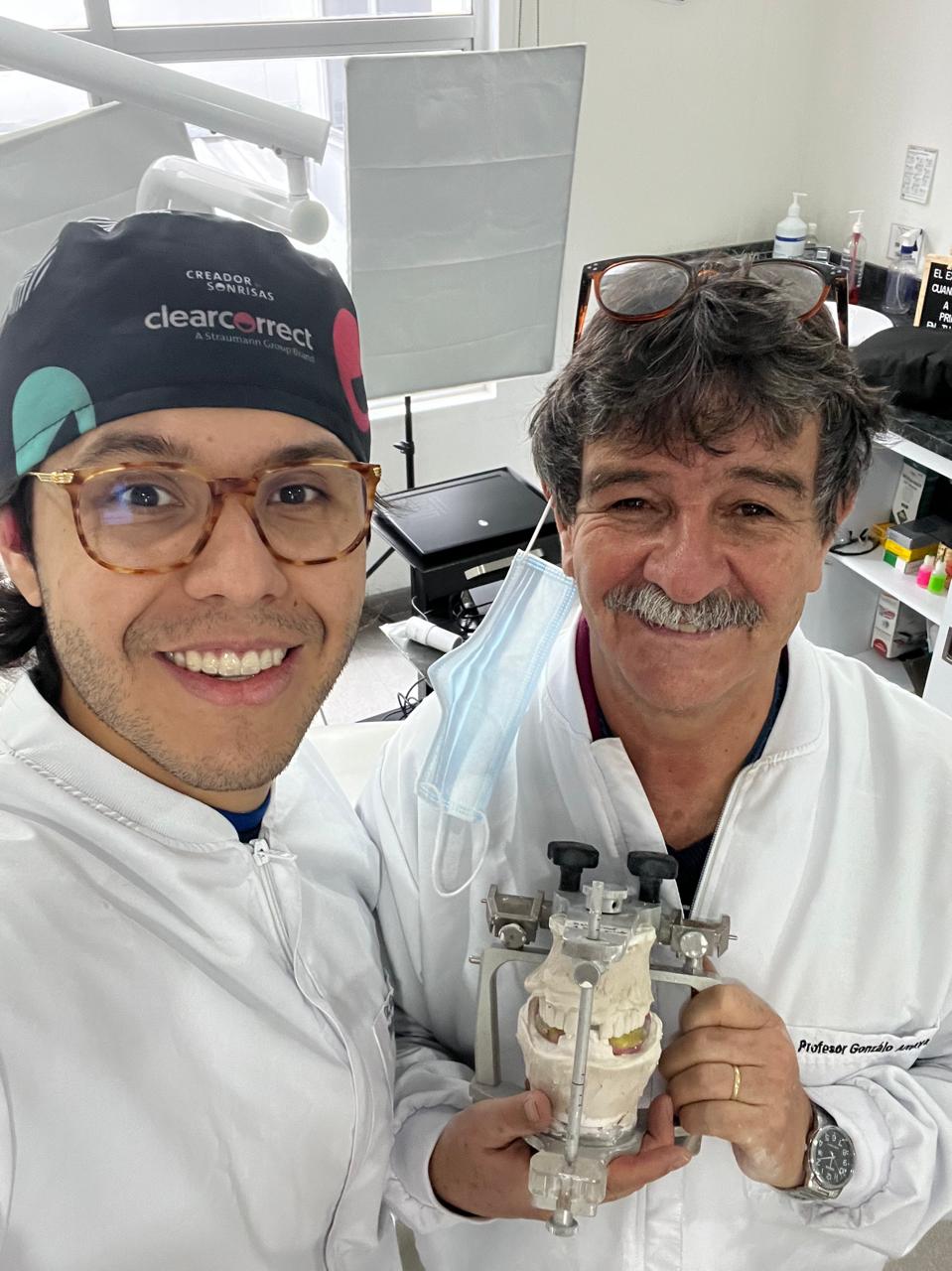
The mechanical articulator held plaster models and approximated jaw movement using average values. The virtual one uses your scans and, where indicated, a recording of your actual condylar movement.
We can open, close, move laterally and forward, and see precisely which surfaces contact and when. Interferences are identified and eliminated on screen rather than by grinding ceramic afterwards.
Its limits, stated plainly
It captures maximum intercuspation well and centric relation less well, which matters specifically when vertical dimension is being changed.
In patients with few stable contacts, the digital alignment has insufficient reference and physical records are still needed. It is a tool with defined boundaries, not a replacement for clinical judgement.
What still cannot be skipped
Months in provisionals at the proposed new bite. The screen predicts; the patient’s muscles and joints decide.
A full-mouth plan going straight from design to definitive restorations has skipped the only real test.
The articulator makes the design defensible before anything is made. The provisional phase proves it. Both are needed, and the second is the one that gets cut.
Questions about your own case? Send us your photos and we will walk you through the options.