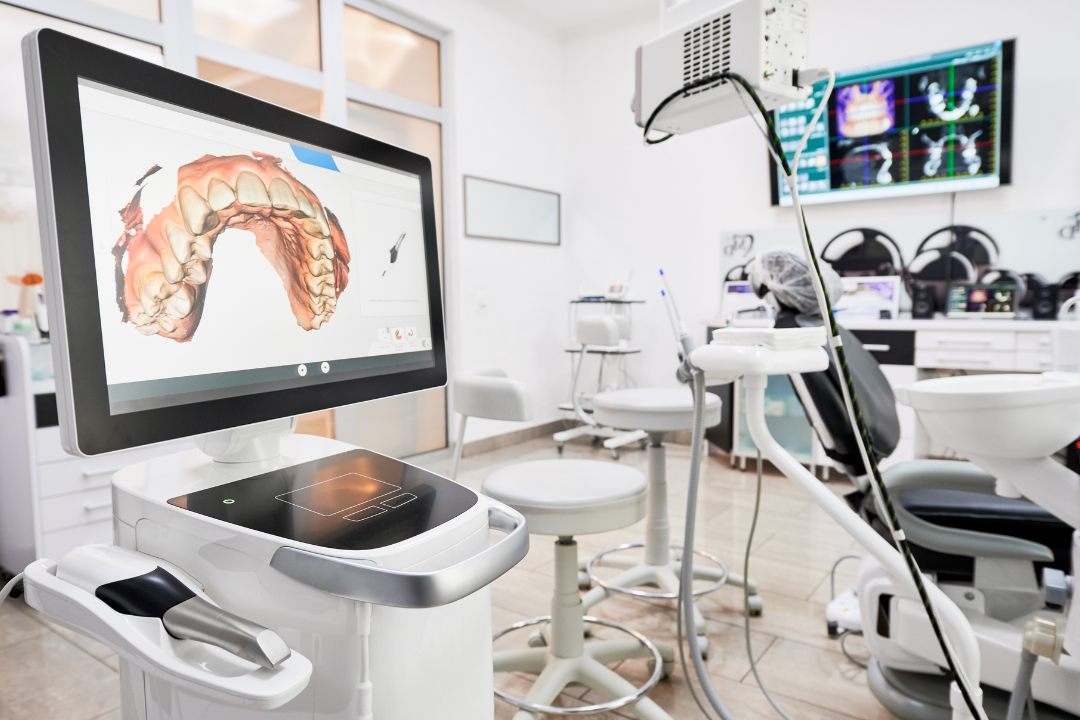
A normal dental x-ray is a flat picture of a three-dimensional problem. A CBCT is the difference between guessing and measuring, and it changes what can honestly be promised.
What a flat image cannot tell you
On a panoramic x-ray, bone, roots and nerves are layered on top of one another. You can see height. You cannot see width, and width is what decides whether an implant fits.
That single limitation is why an implant plan produced from a panoramic alone is provisional whatever it says on the paper.
What the scan shows
Slices in any direction. How much bone there genuinely is, in three dimensions. Exactly where the nerve in your lower jaw runs. How far the sinus has expanded into the upper back. Whether a dark area at a root tip is a small lesion or a large one.
It also finds things nobody was looking for: unerupted teeth, cysts, sinus disease, cracked roots.
Why it matters most for travelling patients
If grafting turns out to be needed, that adds months and possibly a second trip. Discovering that on day one of a seven-day visit is a genuinely bad outcome.
A CBCT reviewed before you fly means the plan you booked around is the plan you get.
The radiation question
The dose is low, comparable to a few days of natural background exposure, and far below medical CT. But we do not take one routinely.
The test is whether the information will change a decision. For implants it almost always does. For a filling it does not.
If someone quotes you a fixed price for implants without cross-sectional imaging, they are estimating. Ask for the scan before treating any number as final.
Questions about your own case? Send us your photos and we will walk you through the options.